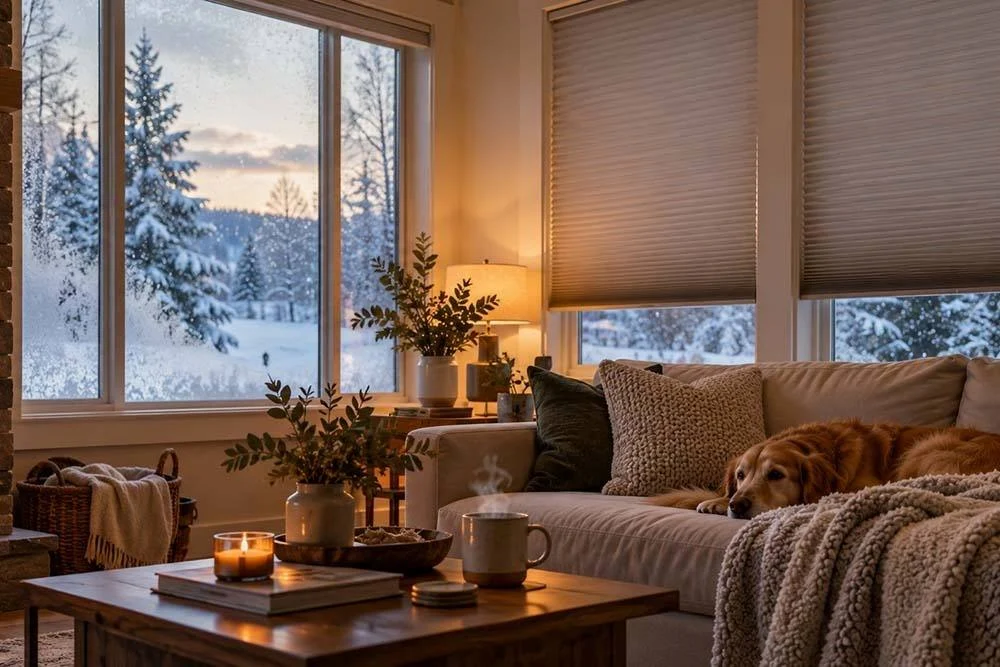
Buying blinds becomes much easier when you stop treating every window as the same problem. A south-facing family room, a street-level bedroom and a basement office may all need window coverings, but they do not need the same solution. The most reliable way to choose is to begin with the room, the window and the behaviour you want from the blind – then work backward to style, fabric and finish.
For Calgary homeowners, that room-first approach is especially useful because bright sun, long summer evenings, winter glare and privacy needs can change noticeably from one side of a home to another. A blind that performs beautifully in one room can feel frustrating in the next. This guide gives you a practical decision process rather than a list of products to buy.
1. Give Every Window a Job Before You Choose a Product
Write down the main job of each window covering. Keep it simple: soften glare, create privacy, darken the room, reduce visual clutter, protect a television viewing area, or make a hard-to-reach window easier to operate. If a window has two priorities, rank them.
This step prevents a common buying mistake: choosing a blind because you like the sample and only later discovering that it does not solve the reason you needed a blind in the first place.
- Living room: usually a balance of daylight, view and evening privacy.
- Bedroom: usually privacy first, with stronger light control for sleep.
- Home office: glare management matters more than simply making the room darker.
- Kitchen or dining area: easy operation and a clean, uncluttered appearance often matter most.
- Large or high window: operating method and accurate measurement become part of the decision.
2. Map the Light Instead of Guessing
Spend one ordinary day noticing when direct sun reaches the glass. Morning sun and late-afternoon sun can create very different issues. A room can feel comfortable at breakfast and become difficult to use later when glare lands on a television, dining table or computer screen.
Once you know when the problem occurs, you can decide how much flexibility you need. If the room needs different settings throughout the day, an adjustable product such as zebra blinds may be useful. If you prefer a simple up-or-down solution with a chosen fabric density, roller blinds may be the cleaner answer.
Explore the Winmax Zebra Blinds and Roller Blinds categories when comparing these two approaches.
3. Separate Daytime Privacy From Nighttime Privacy
Privacy is not a single setting. During the day, outdoor light can make a filtered window feel reasonably sheltered from view. After dark, interior lighting reverses that relationship and the same fabric may reveal more than expected. Bedrooms, bathrooms and front-facing rooms should therefore be evaluated twice: once in daylight and once after sunset.
If nighttime privacy is non-negotiable, make sure the product has a genuinely opaque closed position. If daytime flexibility matters more, consider a design that lets you reduce direct sightlines without closing the room off completely.
4. Choose the Blind Type After You Understand the Room
| Room Need | Usually Worth Considering | Why |
| Flexible daylight + privacy | Zebra blinds | Alternating sheer and solid bands provide several intermediate positions. |
| Simple, minimal appearance | Roller blinds | One continuous fabric panel keeps the window treatment visually quiet. |
| Stronger room darkening | Room-darkening or blackout roller fabric | A continuous fabric can provide more direct light reduction. |
| Hard-to-reach or frequently adjusted windows | Motorized option | Useful when manual operation would be awkward or repetitive. |
| Unusual dimensions | Custom-measured blinds | Fit can be planned around the actual opening rather than a retail size. |
5. Decide How Much of the Blind You Want to Notice
Some homeowners want the blind to become part of the room design. Others want it to nearly disappear. Zebra blinds have a stronger visual rhythm because of their horizontal bands. Roller blinds are quieter and often suit interiors where furniture, art or architectural features should remain the focus.
Colour should support that decision, not lead it. A neutral fabric can still be expressive if it has strong texture or banding. A bolder colour can remain controlled if the blind itself is visually simple. Always view samples beside the actual wall paint, flooring and trim instead of choosing from a screen.
6. Treat Measurement as a Performance Issue
Measurement is not only about whether the blind physically fits. It affects edge gaps, alignment, privacy, light leakage and how finished the installation looks. This becomes more noticeable when several windows sit side by side or when the blind is intended to darken a bedroom.
If you are comparing a custom solution, visit the Calgary Blinds service page to review the local offering.
7. Think About Daily Operation Before Adding Motorization
Motorization makes the most sense when it removes a real inconvenience. High windows, wide shades and rooms with several blinds are common examples. It can also create a cleaner daily routine when blinds are opened and closed at predictable times.
For a small, easy-to-reach window that rarely changes position, manual operation may be completely adequate. The goal is not to add technology to every opening; it is to use it where it materially improves the experience.
8. Compare the Whole Quote, Not Just the Fabric Price
Two quotes that appear different in price may include very different scopes. Ask what is included in measurement, fabrication, hardware, installation, operating system and warranty support. A low initial price is less useful if the blind needs to be replaced because the fit or function was wrong.
A better value question is: which option solves the problem properly, looks intentional in the room and remains convenient to use? That question usually leads to a better decision than price alone.
A Five-Minute Buying Checklist
- What is the main job of this blind?
- At what time of day does sunlight create the biggest issue?
- Do I need privacy mainly in daylight, at night, or both?
- Do I want the blind to stand out or visually disappear?
- Would custom measurement or motorization solve a real practical problem?
Original Visual Proof to Add
| Use real Winmax project imagery rather than generic stock photos.
· Before-and-after images of a real Calgary installation taken from the same camera position. · A close-up showing the finished edge gaps and mounting detail on a custom blind. · A fabric sample photographed in the customer’s actual daylight rather than showroom lighting. |
Frequently Asked Questions
Q1. What type of blinds works best for Calgary homes?
A: There is no universal winner. Zebra blinds suit rooms that need adjustable daylight and privacy, while roller blinds are often preferred for minimal styling and stronger room-darkening options. The room and window should determine the product.
Q2. Should all the blinds in a house match?
A: They can share a colour family or finish without using identical fabrics everywhere. Keeping the visual language consistent while changing opacity by room is often more practical.
Q3. What should I choose for a bedroom?
A: Prioritize nighttime privacy and the amount of light you want to block. A room-darkening or blackout roller fabric is often a practical starting point.
Q4. Are zebra blinds suitable for living rooms?
A: Yes, especially when you want to keep daylight in the room while changing privacy levels during the day.
Q5. When are custom blinds worth it?
A: They are most valuable when fit, edge gaps, alignment, unusual dimensions or a polished finished appearance matter.
Q6. Do I need professional measurement?
A: It is especially useful for larger, non-standard or grouped windows, and anywhere a measurement error would noticeably affect light control or alignment.
| Choose the window treatment around the way the room actually works. |